
Tabletop Companion
en
Blind Hunter badge

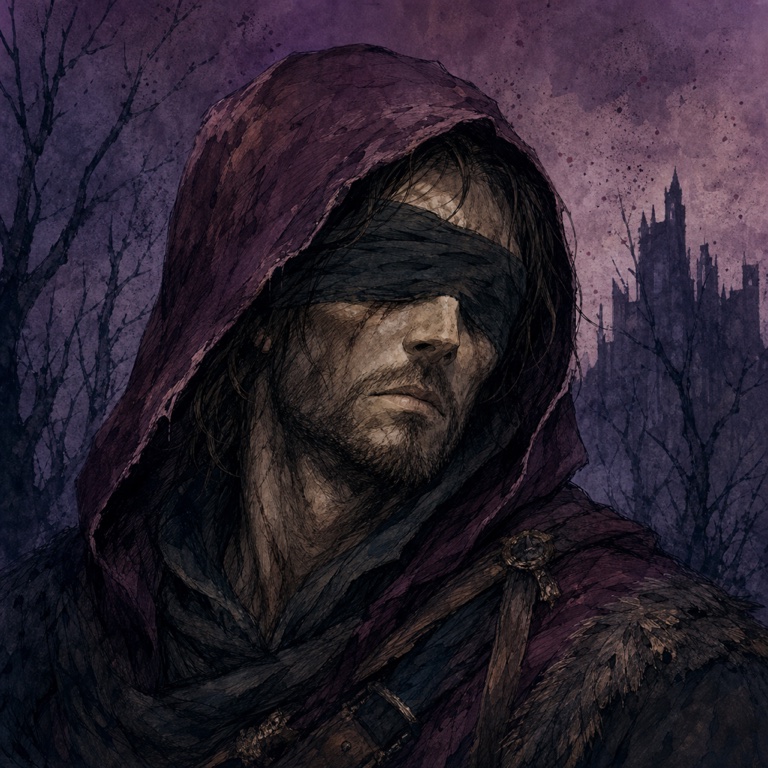
Blind Hunter

While Camelot argues, you memorize voices — and at the end, the hunted become the hunters.

Hard — a listener whose whole game is one final shot

Background

The Blind Hunter stalks every game of Quest. Outwardly another Minion of Mordred, the Hunter carries Evil's most dramatic card: when the endgame arrives, they may call the Hunt — turning the closing scene away from Good's accusations and toward Evil's, as the Hunter tries to identify key Good characters outright.

Where other Minions play cards and pick teams, your true work is listening. Every knowing hint, every oddly confident read, every player the table quietly defers to is a clue about who holds Good's information. The Cleric spends the game hiding from exactly one person: you.

How you win

You share Evil's standard win — three failed quests that survive Good's Last Chance — but you alone hold the alternative ending: once the Final Quest arrives, you may initiate the Hunt and try to pick out Good's key characters (your card states the exact targets). Call it right, and Evil wins on the spot regardless of how the accusations were leaning.

That option turns you into Evil's insurance policy. Even when the conspiracy has been sloppy and the Last Chance looks lost, a Hunter who spent the game listening can still snatch the win with two well-chosen names.

How they play

Play the round-to-round game as a disciplined Minion — but keep your real ledger open at all times:

  • Hunt information, not quests — you care less about failing quest three than about who flinched when it failed. Track confidence: who "guessed" right too often, whose hunches the table obeys
  • Provoke the informed — float wrong theories on purpose and watch who can't resist correcting you. The Cleric's discipline cracks in small ways
  • Stay unremarkable — your Hunt lands only if you reach the endgame alive and unsuspected; a Hunter who drew attention taught Good to guard its secrets
  • Coordinate the ending — as the third fail approaches, weigh it honestly: does Evil survive the Last Chance? If not, the Hunt is your parachute — make sure your fellow Minions don't force the wrong ending

Strengths

  • You are the only player who can change what the endgame is. Good prepares all game for its Last Chance speech — and you can replace that scene with a quiz they never rehearsed.

  • Because you're in every game, Good's informed characters must always speak as if a Hunter is listening — muting their best asset all game long even if you never call the Hunt.

Weaknesses

  • !

    The Hunt is a single, final, all-or-nothing declaration. A wrong name doesn't wound Good — it hands them the game, overriding whatever Evil built across five quests.

  • !

    Your targets are the quietest players at the table by design — Good's informed characters spend the whole game disguising themselves as ordinary Servants precisely to starve you of evidence.

Tips & tricks

  • Tip

    After every quest, privately rank the table by how informed their behavior looked — not how good or evil. The player who steered gently away from the first Leader's team without ever saying why belongs at the top of your list.

  • Tip

    A losing scoreboard is your camouflage: when Evil trails on quests, nobody expects the knockout. Play the humble struggling Minion while your real weapon — the list of names — sharpens in silence.

  • Tip

    Before Evil commits its third Fail, run both endings in your head: the Last Chance (does Good have your conspiracy mapped?) versus the Hunt (do you have their informants mapped?). Push the conspiracy toward whichever quiz Evil is likelier to pass.