
Tabletop Companion
en
← Learn

Field guide

How to play Catan: Explorers & Pirates

3–4 players (up to 6 with the 5–6 player extension) High — the largest Catan expansion, driven by exploration, cargo logistics, and multi-scenario missions

What is Catan: Explorers & Pirates?

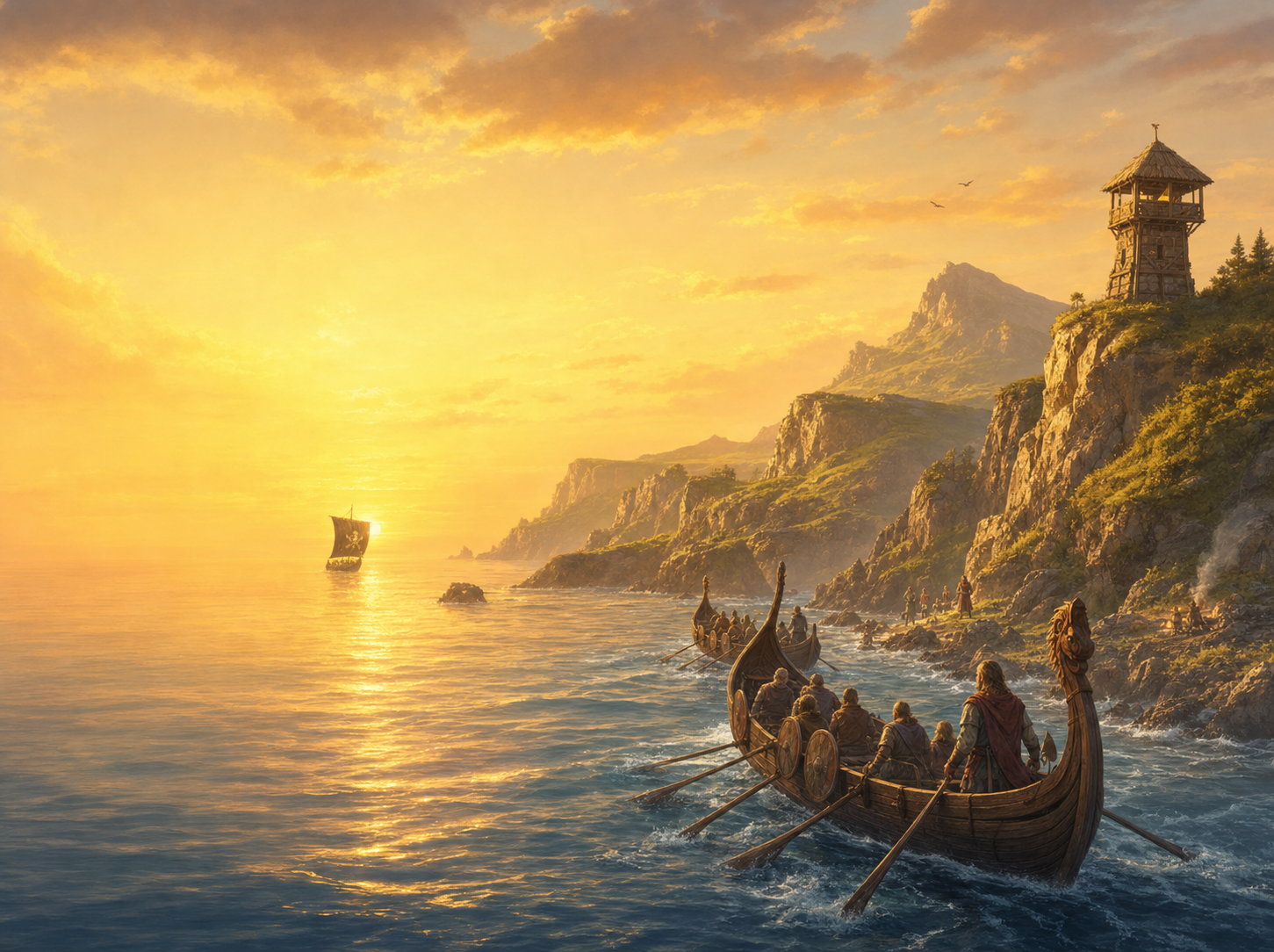
Catan: Explorers & Pirates is an expansion by Klaus Teuber that requires the Catan base game to play. You begin on a modest home island and sail into an uncharted sea of face-down hexes — flipping them as your ships push further out, founding settlements on new coasts, gathering trade goods, and battling pirate ships along the way. The expansion plays as a series of scenarios, each with its own victory conditions and mission goals layered on top of the standard point total.

The core difference from base Catan is not just the map — it is the addition of a dedicated ship-movement phase between production and building. Your ships carry settlers, crew, spice, fish, and gold across the sea, turning each turn into a cargo-routing puzzle. Choosing where to sail, which hexes to reveal, and which missions to chase before an opponent completes them is the heart of the game.

Setup

Choose and read the active scenario booklet before setting up — each scenario specifies its map layout, face-down hex tiles, mission tokens, and victory-point target.

  1. Set up the home island. Build the Catan base game board as your home island, then lay out the surrounding sea region with face-down hexes as the scenario directs.
  2. Take your pieces. Give each player their standard starting roads, settlements, and cities, plus 12 ships in their color.
  3. Place scenario pieces. Put out pirate-ship tokens, mission tokens, and any starting trade goods as the scenario indicates.
  4. Place starting settlements. Complete the reverse-placement starting round on the home island and collect starting resources as normal.
  5. Note the victory conditions. Record the scenario's special victory conditions alongside the standard VP target — both must be met to win.

How to play

Explorers & Pirates keeps the base game's roll-trade-build turn and adds a ship-movement phase: produce, move ships, trade, build.

Phase 1 — Roll for production: Roll both dice. All players collect resources from their settlements and cities as normal; a roll of 7 triggers the robber on the home island.

Phase 2 — Move your ships: Each ship has a movement allowance for the turn. Move your ships one sea edge at a time, carrying any cargo they hold. - Exploration: Moving a ship adjacent to a face-down hex flips it face-up, revealing a new land or sea tile — often with a small discovery reward. - Cargo: A ship holds one large piece (a settler or fish haul) or two small pieces (a crew member or spice). Load a settler (to found a new settlement elsewhere), a crew member (to staff a mission), or a trade good (spice, fish, or gold coin) picked up from the relevant hex or harbor. - Pirate combat: If your ship moves onto or adjacent to a pirate-ship token, roll for combat. Winning the roll earns a reward and clears that pirate; losing costs you a card.

Phase 3 — Trade: As in base Catan, trade resources with other players or with the bank and harbors.

Phase 4 — Build and settle: Spend resources to build roads, ships, harbor settlements, or cities. To found a new settlement on a newly discovered coast, you must have delivered a settler there by ship first — you cannot simply build across the sea as in Seafarers. Use this phase to advance mission goals as the scenario requires.

How to win

The first player to satisfy the active scenario's victory conditions on their turn wins. Conditions typically combine a set number of victory points with specific mission milestones — such as founding a required number of new settlements, delivering trade goods to the Council, clearing pirate lairs, or completing fish and spice supply runs. Check the scenario card at the start of play so you know which goals take priority.

Strategically, read the scenario missions before choosing where to sail — the player who identifies the highest-value missions early and plans efficient cargo routes around them almost always finishes ahead. Remember that a single ship can only carry one piece of cargo at a time, so prioritizing what each ship ferries matters more than raw speed.