
Tabletop Companion
en
← Learn

Field guide

How to play Azul

2–4 players Low–medium — abstract tile drafting

What is Azul?

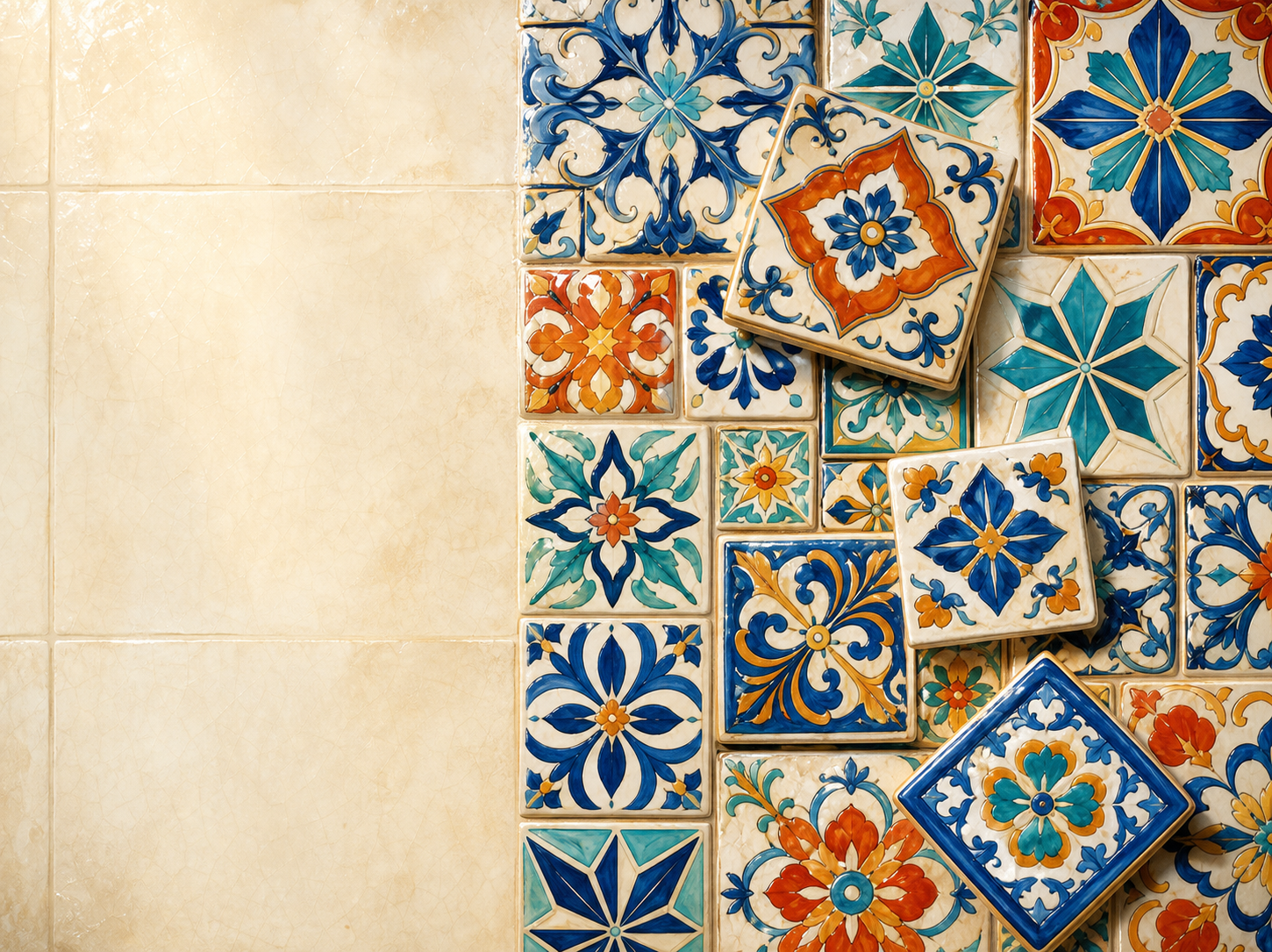
Azul is a tile-drafting abstract by Michael Kiesling in which you claim colorful ceramic tiles from shared factory displays and arrange them on your personal wall. Each round you compete with your opponents for the colors you need, knowing that whatever you can't fit on your board costs you points.

The rules are few and the turns are swift, but the tension is real — the right tile at the right moment can accelerate your wall while leaving rivals starved of what they need. Every draft decision ripples across the table, making Azul feel surprisingly sharp beneath its elegant surface.

Setup

  1. Each player takes a player board and places their score marker on space 0 of the score track.
  2. Arrange factory displays in the centre of the table: 5 for 2 players, 7 for 3, 9 for 4. Fill each factory by drawing 4 tiles at random from the bag.
  3. Study your player board: the left side has five pattern lines (rows of 1–5 spaces, filled from right to left); the right side is the wall (a 5×5 grid where tiles score). Every wall space is pre-printed with a specific color in a staggered diagonal — when a pattern line is complete, its tile moves to the one pre-printed space in that row that matches that color; you have no choice of position. Each pattern-line row feeds exactly one corresponding row on the wall.
  4. Place the first-player marker face-up in the centre of the table — leftover tiles from factory drafts also collect here, forming the centre pool.
  5. The player who most recently visited Portugal goes first (or the youngest if no one has).

How to play

Azul is played over several rounds. Each round has two phases that repeat until the game ends.

Drafting phase — players take turns clockwise until all factory displays and the center are empty:

  • On your turn, choose one factory display and take all tiles of a single color from it; the remaining tiles slide to the center. Alternatively, take all tiles of one color already in the center.
  • If you are the first person to take from the center this round, also take the first-player marker and place it on your floor line — you go first next round but start with a small penalty.
  • Place the tiles you took onto one pattern line (a row on the staircase), filling slots from right to left. A pattern line accepts only one color, and you cannot use a color whose matching wall space is already occupied. Any tiles that exceed a line's capacity, or that have nowhere legal to go, land on your floor line — each filled floor slot deducts points at round's end — the seven floor slots cost −1, −1, −2, −2, −2, −3, −3 from left to right (printed on your board).

Wall-tiling phase — once all tiles are claimed, players score simultaneously:

  • Each fully filled pattern line moves its rightmost tile onto the matching space on the wall and scores immediately. An isolated tile scores 1 point; a tile that extends an existing group of neighbors scores 1 per tile in the connected horizontal run plus 1 per tile in the connected vertical run.
  • Remaining tiles from completed lines return to the bag lid. Incomplete lines stay on the board for the next round.
  • Floor tiles are subtracted from your score (minimum 0), then all floor tiles are discarded.

How to win

The game ends after the wall-tiling phase in which at least one player completes a full horizontal row on their wall. Players then add end-game bonuses on top of their accumulated score: +2 for each complete horizontal row, +7 for each complete vertical column, and +10 for each color whose five wall tiles are all placed. The player with the highest total wins; ties are broken by the most complete horizontal rows, then most tiles placed.

Strategically, keep your floor line as empty as possible — a few careless overflows can erase an entire round's gains. It often pays to draft a color your opponent desperately needs even if you only want one tile of it yourself, forcing them to the center and the first-player penalty. Think two rounds ahead: plan which pattern line feeds which wall space so your tiles chain into long runs of neighbors when they finally score.